
Most people will be unaware that as part of our Skills Academy in His Majesty’s Prison and Probation Service (HMPPS), some prisoners can take up an apprenticeship while still serving their sentence, with training taking place inside the prison and employment on day release with an employer. Those individuals have an opportunity to change their lives around, to look at an alternative way of living and not to come back to prison. I am the Other Government Departments Senior National Lead within HMPPS and the Prisoner Apprenticeship lead for England. I work across all prisons in England to support the development of apprenticeship opportunities. I talk to government departments on a daily basis to find out how we can support them or how they can support us. I also look at opportunities for prisons, working with providers and establishments to identify key areas that fit labour market need.
Until recently, the legal requirement for an employment contract meant serving prisoners couldn’t take up apprenticeships. We realised this was preventing us from implementing these amazing qualifications that would lead to opportunities for individuals and a possible career pathway. Then, in 2022, we managed to have that legislation adapted to allow apprenticeships for serving prisoners. It means people can leave prison with a job to go to, and with the stability and purpose of a career they are far less likely to reoffend. Apprenticeships also support a number of wider government priorities. They contribute to safer streets by reducing reoffending and they support the economy by lowering the cost of people returning to custody while helping to grow the workforce and increase tax revenue. For the individuals taking part, they offer something just as important: a route into stable work, renewed confidence and a different future, away from crime.
We can cover everything in prisons including foundation apprenticeships and Level 2 right up to Level 6. We can also incorporate the new modular apprenticeships. It’s mostly Level 2 and 3 entry-level apprenticeships currently, in key areas like welding. We deliver apprenticeships across a wide range of prison settings, from secure prisons to those where eligible individuals can work or train in the community. And because many individuals in custody have had poor experiences of formal education the practical, skills-based nature of apprenticeships works perfectly in their favour.

Of course, dedicated employer partners are essential to all this and much of my work involves connecting with them. It’s understandable that they may have a certain perception of what prisoners are like, based on what they’ve seen on TV. They want assurance that any potential risks to their staff or reputation are being properly understood and managed. That’s why we involve employers early, bringing them into prisons to meet potential apprentices and take part in the recruitment process, rather than presenting them with candidates once decisions have already been made. This partnership approach helps employers make informed choices, while also giving us the opportunity to understand and address any concerns they may have.
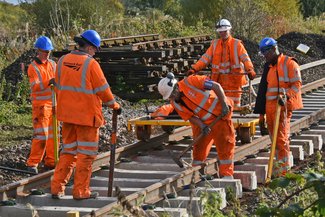
We're now at a point where we have employers come to us and say, we've heard such great things, can we be part of this? Part of it is retention – individuals given these opportunities don’t want to let employers down, so they stick around. The employers who took a chance early on are now reaping the benefits and others can see that. The rail industry has been absolutely phenomenal. Before them we had one or two prisoners supported at any one time. They were our first cohort approach within prisons and supported 14 individuals on their operative Level 2 apprenticeships – and all of them got jobs.
One former construction apprentice, who now works for the organisation that trained him, told me the opportunity changed not just his but his entire family’s lives. You can’t beat hearing that.
Another started in prison kitchens and completed a Level 2 Production Chef apprenticeship at Hydes Brewery. He’s since been promoted. These are the life-changing outcomes apprenticeships can offer former offenders if we simply give them a second chance. I worked in prisons for fourteen years before taking on this role. And, as a member of staff, you want to make sure that person doesn't come back. You want to be there and help that individual look at things differently and be there for their family. You feel a sense of ‘Oh, I didn’t do enough’ if you see that person move back through the door. Every organisation that's involved in this has been phenomenal and they are making an absolute difference. It's a pleasure to work with everybody, genuinely, because it's being done for the right reasons.
Written by
Michelle Downer is Prisoner Apprenticeship Lead at His Majesty’s Prison and Probation Service.
If you’re an SME wondering how this works, get in touch with us via New Futures Network. We’ll connect you with the right establishment.