
In my role at the Lancashire Skills & Employment Hub, I work closely with small and medium-sized enterprises (SMEs) as they navigate the apprenticeship system often for the first time. What consistently comes through is that while the appetite to invest in young people is strong, the system itself can feel complex and difficult to access. But when the right support is in place, apprenticeships can be transformational not only for young people starting their careers, but for the businesses that invest in them. SMEs are the backbone of Lancashire’s economy, yet many face ongoing challenges including skills shortages, recruitment pressures, rising costs, and limited capacity. In this context, investing in new talent can feel like a risk rather than an opportunity.
A key part of our role is providing clear, impartial guidance that simplifies the apprenticeship process. This is particularly important in a landscape shaped by ongoing reforms, policy updates, and changing incentives. For many employers, knowing where to begin, from choosing the right apprenticeship standard to identifying a suitable training provider, can be a significant barrier.
Understanding the full picture of support is equally important. While apprenticeship training is largely government-funded, SMEs often encounter additional costs, including travel, accommodation, equipment and the time needed for supervision and onboarding. For businesses operating in specialist sectors these pressures can be even greater. Without clear accessible information these factors can quickly outweigh the perceived benefits.
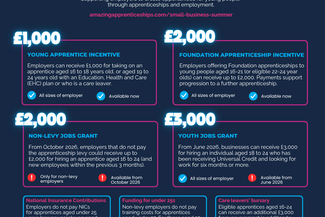
This is where local initiatives play a vital role. The Young Apprentice Grant from Lancashire County Council, delivered by the Lancashire Skills & Employment Hub, helps to ease financial pressures and gives SMEs the confidence to invest.
SWAT Access Ltd provides a strong example of this in action. The Lancashire-based business has demonstrated a clear commitment to developing its workforce through apprenticeships. Through the Young Apprentice Grant Fund, we have supported the company in continuing to invest in their apprentice, Josh, helping to offset the additional costs associated with his training.

SWAT Access is one of many businesses across Lancashire willing to invest in young people when the right support is available. Their experience shows how targeted funding can unlock opportunities that might otherwise not exist. Josh’s apprenticeship includes CITB training in three- to four-week block releases every eleven weeks, requiring accommodation and additional costs alongside daily business operations. Support from the grant has helped ease these pressures, allowing his development to continue.
The impact is already evident. Josh plays an important role in maintaining Mobile Elevated Work Platforms (MEWPs), carrying out servicing, repairs, and inspections to meet strict safety and compliance standards. Through this hands-on experience, he is developing strong technical skills and confidence, while contributing directly to safe and efficient business operations. His progress has also been recognised nationally, with nominations for both Rising Star and Apprentice of the Year at this year’s National Apprenticeship Awards an achievement that reflects both individual commitment and employer investment. SWAT Access has also signed the Lancashire Skills Pledge, reinforcing its commitment to workforce development and supporting opportunities for local people.

The pledge represents a wider ambition across the county to invest in skills, support apprenticeships, and strengthen the local labour market through collaborative working. A common message I hear from SMEs is: “We want to take on an apprentice, but we’re unsure where to start or whether we can realistically afford to.” This highlights an important point - it is often not a lack of willingness that holds businesses back, but a lack of clarity, confidence, or capacity to navigate the system. By providing straightforward, impartial advice and helping employers understand both the opportunities and the realities of apprenticeships, we can turn that willingness into action.
If we are serious about widening opportunity for young people and building a resilient, future-ready economy, SMEs must be central to the apprenticeship system. The willingness is already there - businesses want to invest and young people want to succeed.
The challenge is ensuring the system is accessible, flexible, and supported by clear communication that translates policy into practical guidance SMEs can act on. Programmes like the Young Apprentice Grant demonstrate what is possible when barriers are reduced. The success of employers like SWAT Access and apprentices like Josh highlights the real impact apprenticeships can have not only on individual businesses, but on the wider economy and society.
Written by
Dawn Werra, Project Coordinator at the Lancashire Skills & Employment Hub, providing free, impartial advice to support SMEs in navigating apprenticeships, accessing skills funding, and creating opportunities for young people across Lancashire.