Edge has long valued the often-unsung contribution of island communities to education, writes Arianna Abdul-Nour, Sustainable Development Manager at Island Innovation. By necessity, islands must explore some of the most radical examples of innovation anywhere in the sector, but these remote settings often sow the seeds for practice that eventually spreads to the mainland. Take the place-based curriculum models pioneered by small island schools – these are now gaining serious traction on the mainland. It is a privilege to see these concepts emerge, which is why I was thrilled to co-host a webinar as part of our longstanding partnership with The Edge Foundation.
Opening the session was Helen Hillier (Careers Advisor, Isle of Man Government) who posed a simple question: why wait until secondary school to talk to young people about careers? The Isle of Man’s primary careers education programme, Life Adventures, was inspired by insights that show children make deep, unconscious decisions about their futures even at early primary age. Prior to reaching secondary school many have already absorbed assumptions about what people “like them” can and can’t achieve. Life Adventures aims to challenge this. Delivered to Year 2 and Year 6 pupils, the programme follows the Japanese concept of Ikigai – finding meaning at the intersection of what you love, what you’re good at, what the world needs, and what you can be paid for. The goal is not to push children towards particular careers, but to build self-awareness, curiosity and confidence.
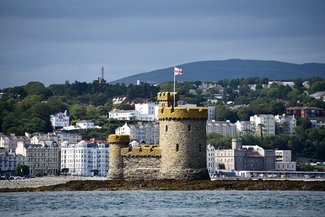
The programme also relies heavily on the local community, with an extensive network of employers – from engineers to maritime experts – running hands-on, practical classroom workshops. This foundation sets students up for transition points long before they reach them. As Helen said, “Careers should never be about just choosing a job. It's more about learning who you are, your self-awareness and having an understanding of what makes you happy.”
Richard Tarves (Business Manager, e-Sgoil, Outer Hebrides) featured in an island innovation session in 2024. The story of how an online school founded in 2016 to address a teacher shortage became Scotland’s national e-learning service during the pandemic is now well established. What’s intriguing is how e-Sgoil’s work is evolving. While still prioritising live, interactive video teaching, e-Sgoil has expanded its focus to support interrupted learners – students dealing with severe mental health anxieties or sensory sensitivities who struggle to attend physical classrooms but can engage safely online. Recently, e-Sgoil has begun leaning into new technologies, running projects to help educators integrate generative AI into the curriculum. This involves squaring ethical use of the tech with genuine digital skills-building, while also navigating students’ philosophical scepticism around automation.

Richard believes technologies like AI are a levelling issue rather than a geographical one – islands are no more or less exposed to them than anywhere else. However, islands have a history as early adopters of new tech, which is exactly how e-Sgoil emerged in the first place. When asked if digital resources alone could ever replace teachers, Richard was clear: “Live teaching is still important – the impact and skill a teacher brings to young people’s learning is crucial. While we teach online, most of what we do is live interactive rather than self-directed.”
Lastly, Chris Torode (Director of Apprenticeships, The Guernsey Institute) demonstrated the community impact of a mature vocational system. Apprenticeships in Guernsey have been running for 75 years. Today, the island enrols around 330 apprentices annually across 27 pathways and has achievement rates of approximately 90%. What makes the model successful is its local approach. As well as taking on apprentices, employers of all sizes sit on Industry Advisory Boards to help shape the curriculum, ensuring that taught skills match the needs of the island’s economy. The system serves apprentices ranging from 16 to 59, functioning as a retraining and reskilling engine as much as a route for school leavers. This is particularly valuable on Guernsey, where the workforce is small and every worker counts.
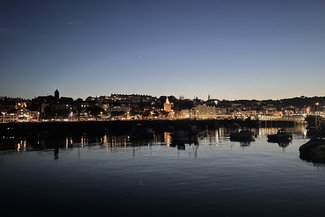
They have also recently introduced the Career Launch apprenticeship. Borrowing a Scandinavian model, this front-loaded course includes an 18-week full-time block at college to hone interpersonal skills, phone manners and other office competencies, before transitioning students into a standard workplace. The programme is small, but popular and expanding. 98% of Guernsey’s apprentices say they would recommend island apprenticeship pathways to others. Many former trainees are also now company directors coming back to hire the next generation. This full circle system shows what vocational education can do when it’s genuinely part of the community. Chris said: “Apprenticeships aren’t just a nice alternative to university. They’re becoming one of the main engines powering our local talent pipeline.”
Across three contributions, a common thread emerged: the innovations that travel furthest from island contexts are the ones most deeply embedded in community.
The Isle of Man's Life Adventures programme works because local employers show up in classrooms. E-Sgoil works because it spent years figuring out how to make remote connection feel personal. Guernsey's apprenticeship system works because the people who went through it come back to hire the next generation. Necessity has always pushed island commuinties to innovate earlier and more creatively than their mainland counterparts, but the innovations that last are the ones rooted in genuine community investment. That is a lesson worth carrying far beyond any coastline.
Showcase of Innovative Island Education
See our webinar exploring innovative approaches to education across island communities here. Whether you're looking for fresh ideas, practical strategies, or inspiration from similar contexts, this webinar offers valuable perspectives from across island education systems.
Written by
Arianna Abdul-Nour, Sustainable Development Manager, Island Innovation