
Why we must address education-business links to solve the NEET crisis
Elaine Lilley MBE, Chair of Edge Foundation's Board of Trustees, argues that the links between education and business must be restored.
A new report
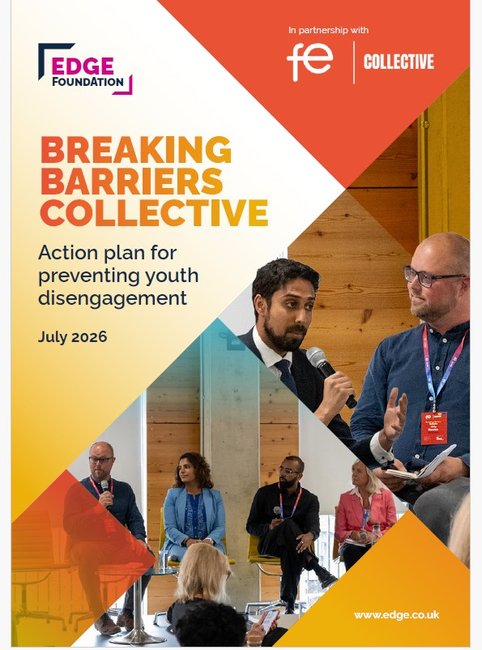
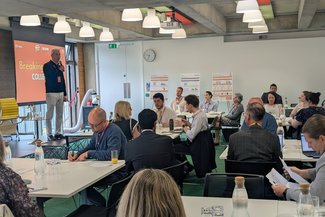
On 2 June 2026 education and skills sector leaders came together in London at the Breaking Barriers collective convened by Edge Foundation in partnership with FE News. The aim was to find ways to tackle the NEET crisis and shape solutions that could influence the Milburn Review. More than 60 experts from government, education, research, employment services, local communities and the voluntary sector collaborated to produce a coordinated programme of reform across education, employment and public policy. This report outlines their ideas and conclusions. It suggests that reducing youth disengagement “requires system change, not another initiative”. Britain’s still-growing NEET (not in education, employment or training) crisis cannot be solved by data alone.
The report warns that care leavers, young people facing health challenges, those from some ethnic minority backgrounds and those who have experienced exclusion continue to face barriers to employment and training. It highlights the decline of traditional starter jobs, the rapid adoption of AI and automation, rising childcare costs and widening regional inequalities as pressures that threaten to push NEET figures higher over the coming decade. It also considers the financial disincentives facing the families of apprentices, including the loss of Child Benefit and elements of Universal Credit.
Olly Newton, Executive Director, Edge FoundationBehind every statistic around those not in education, employment or training is a young person facing a labour market that is becoming increasingly hard to enter, an education system that often struggles to explain where qualifications lead, and a support landscape so fragmented that many fall through the cracks. Now is the time for bold, coordinated action.
This report outlines a six- point action plan that includes a national transition framework from education to employment, solutions shaped by local labour markets and young people's agency at the centre of reform, with lived experience embedded in the design of policy and services.