Just under a year ago, EngineeringUK published Foundation apprenticeships: Pathways to success. The report set out seven criteria we believe must be met if foundation apprenticeships are to become a meaningful route into engineering and technology careers for young people. Growing the engineering and technology workforce – and making it more diverse – will be key to addressing skills shortages while opening up more opportunities for young people. Apprenticeships are an important route into engineering and technology careers, which is why we have welcomed foundation apprenticeships in principle. However, our report warned that foundation apprenticeships could face challenges if they struggle to reach larger numbers. One year on, the question is not just how many foundation apprentices there are. It is also what is the early evidence telling us about whether the model can work in practice for employers and young people and grow over time.

The numbers remain small, but they are growing. In February, there were 91 active foundation apprentices across engineering and manufacturing, construction and digital. By July, that had increased to 129. Some pathways have seen encouraging growth, with engineering and manufacturing increasing from 26 to 49 active apprentices and onsite trades from 37 to 49. It is certainly not rapid growth, but it is a steady increase. Other areas, however, have seen little or no uptake - finishing trades, for example, remained at zero throughout. There are also signs of regional variation, with almost half of foundation apprentices in these sectors based in the South West. Understanding what sits behind these numbers – and whether there are lessons that can be applied elsewhere – will be important.
One theme from discussions with employers is the importance of progression and understanding how foundation apprenticeships fit into wider workforce plans. Having a clear destination matters. Foundation apprenticeships are designed primarily to support young people who may need additional preparation for a full apprenticeship or employment. Within engineering and technology, they are generally viewed not as an endpoint, but as a stepping stone. The challenge is figuring out how foundation apprenticeships fit alongside existing apprenticeships, T Levels and other progression routes. Some employers have questioned whether the 8-month minimum duration strikes the right balance between preparing young people for work and providing a route that feels practical. Questions have also been raised about age-related eligibility rules and how foundation apprenticeships fit with wider recruitment practices.

These questions may be easier for larger employers to answer than smaller ones. Larger organisations often recruit at scale and run multiple apprenticeship pathways. For smaller employers, volumes are lower and progression routes may be less predictable. That matters because SMEs employ a large share of apprentices in engineering and technology. Any barriers they face could limit wider uptake. In 2023/24, SMEs employed around half of engineering and technology apprenticeship starters at Levels 2 and 3. In Construction Planning and the Built Environment, the proportion was even higher. Yet SME participation in apprenticeships has been falling. Between 2018/19 and 2023/24, Level 2 Engineering and Manufacturing Technologies starts in SMEs fell by almost two-thirds. If foundation apprenticeships are to grow, they will need to demonstrate value to employers whose participation in apprenticeships has been declining.
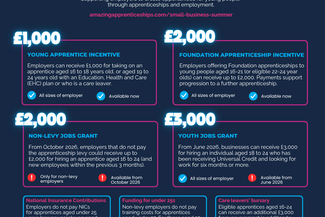
Awareness may be part of the challenge. The Federation of Small Businesses has highlighted that SMEs often rely heavily on training providers to understand incentives and funding opportunities. While information is available through Skills England, employers need the awareness and the capacity to find it. Smaller employers also often face practical challenges around time, resources and pastoral support for young recruits. If foundation apprenticeships are to grow beyond their current small numbers, understanding and addressing these barriers for SMEs will be just as important as raising awareness of the qualification.

For EngineeringUK, the key questions are how more engineering and tech employers of all sizes can adopt foundation apprenticeships - and what happens next for the young people who take them.
The Department for Work and Pensions is gathering evidence on what has worked well and where barriers remain. This should help answer some of the questions raised by employers. It should also provide a clearer picture of whether the low numbers reflect problems with the model itself or simply the challenges of introducing a new qualification. Importantly, it should help identify what is needed to strengthen foundation apprenticeships and support their future growth. Employers keen to get involved with foundation apprenticeships, whether in engineering and technology or other sectors, can find out more about the available standards here: https://skillsengland.education.gov.uk/apprenticeships
Written by
Gemma Peach, Policy Manager, EngineeringUK