
Approaches to education across island communities
Island communities explore some of the most radical examples of innovation, but these remote settings often sow the seeds for mainland practice, says Island Innovation's Arianna Abdul-Nour.
Andy Burnham will be taking office as Prime Minister next week with a range of sobering statistics to contend with on his arrival, including those brought into the forefront of the public mind last month with the publication of the Young people and work: interim report led by Alan Milburn. The report points to the different interconnected systems that are no longer working properly and have contributed to this situation. When it comes to the school system the report notes, “It is often said that what is measured in the public services is what they end up delivering. The school system primarily measures attainment. It too often counts qualifications rather than student destinations or labour market participation. That is a design choice with consequences.”
In response to the report, Andy Burnham has said: “I take very seriously the findings of the recent report by Alan Milburn. We need a complete rethink of how we support the next generation to succeed, and it has to start with the education system.” As part of his platform for leadership he has pledged to bring parity between academic and technical pathways and to expand work placements for young people, and apprenticeship opportunities post 16. The model he developed as Mayor of Greater Manchester, the MBacc, is seen as the exemplar for this vision. The Mbacc is a collaboration between education leaders, industry and community organisations to provide defined progression pathways for learners from age 14 into seven career gateways - industry sectors that are growing in the region and have significant skills shortages.
Learners who choose an MBacc pathway have the option to complete the MBacc Award which brings together five key elements: technical learning, work experience, employer encounters, digital enrichment, and careers conversations. Bringing a place first approach to solving regional economic and youth engagement challenges, this model creates structured collaboration between the education system and employers in growing sectors at scale, and has galvanised different parts of the education, skills and training system around a collective leadership mission with a shared responsibility for delivery and outcomes. Numerous places are developing similar initiatives and innovating from the ground up. These places are building coalitions across institutional and sectoral boundaries to develop new pathways for young people into employment and entrepreneurship, relevant to their interests and local economic priorities. They are often pushing against the limiting downward pressures of the education system, recognising that it doesn’t work well enough for a great many young people, or provide what they need for their next steps in life. Here are four national examples.

The WMBacc (led by Multi Academy Trusts)
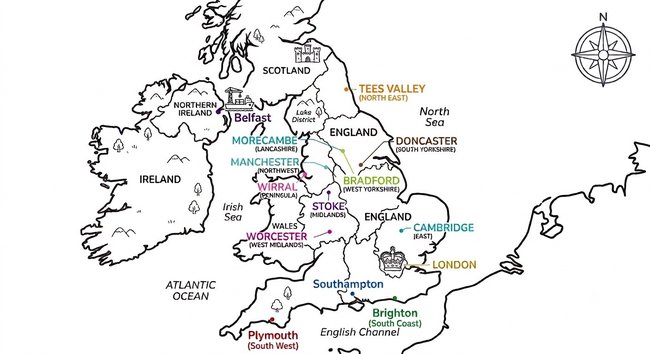
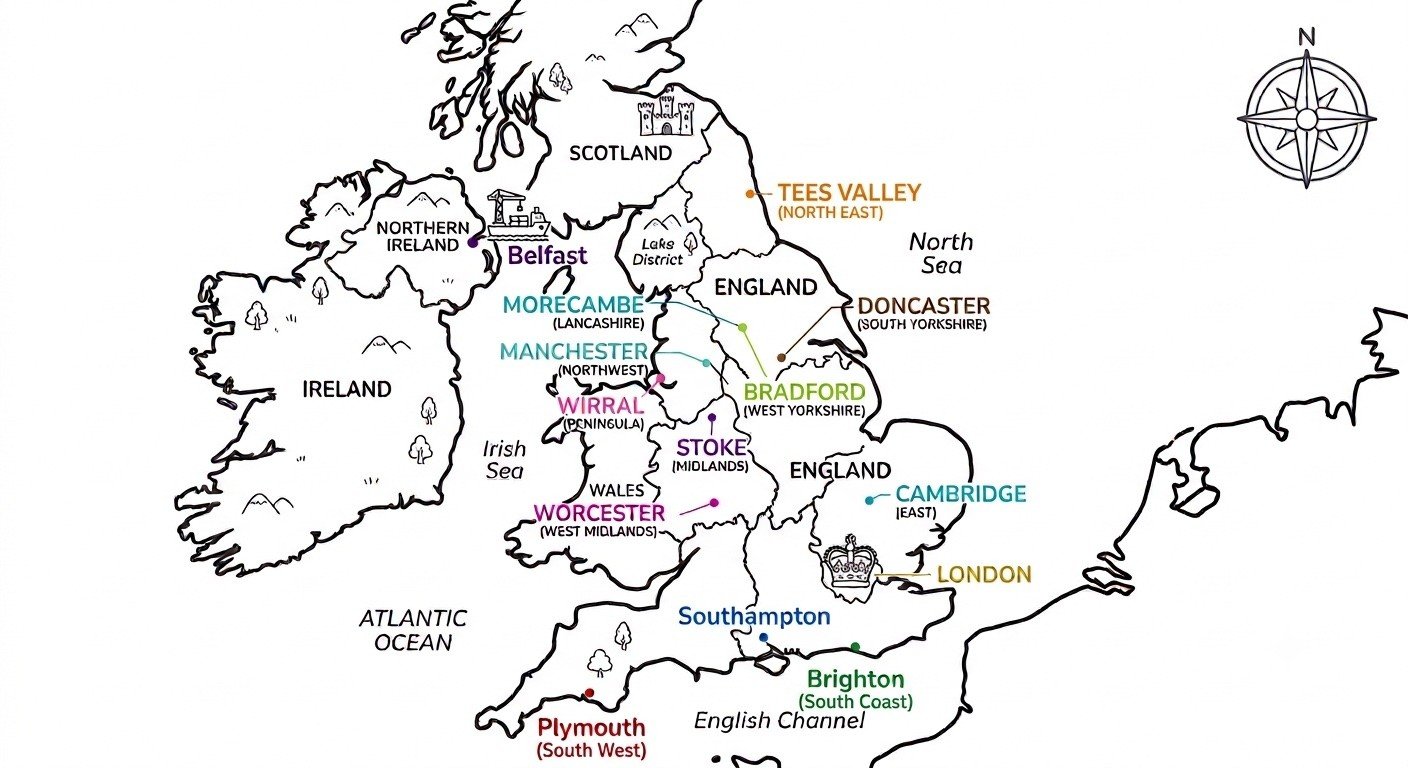
Taking the MBacc as a blueprint, the WMBacc was launched by the CEO Futures Forum in Stoke and Staffordshire as a regional framework designed to connect school curriculums with local career opportunities. Founded in September 2024 by four Multi Academy Trusts, the Forum now represents 40+ different organisations and 100+ schools/colleges across the West Midlands region. The approach has four main elements: an inclusive curriculum preparing young people for academic, vocational and technical pathways; transferable skills embedded through the curriculum from age 3 to 19, with a particular focus on oracy and digital skills; fostering student agency and ownership of their learning; and collaborative leadership beyond institutional boundaries to innovate and strengthen local connections. Learners can choose from six employer aligned curriculum pathways from age 14: Engineering, Design & Manufacturing; Construction & Green Economy; Digital Technology, Business & Finance; Creative & Culture; Health, Social Care, Sport & Public Services; and Education & Early Years.
Doncaster Talent & Innovation Ecosystem (local authority led)
The Talent and Innovation Ecosystem (TIE), led by the City of Doncaster Council, is a transformational blueprint driving lifelong learning and economic growth. Grounded in the City’s Education and Skills Strategy 2030, which sets out a partnership strategy for lifelong learning and bringing business, education and skills sectors closer together, the TIE focuses on developing high-level skills in key emerging sectors like health and care, advanced engineering, creative and digital, and green technology. Core initiatives include: a digital and tech hub designed to serve as a magnet for inward investment; Centres of Excellence to create a pipeline from primary education through to further education and employment; and Innovation Partnerships to encourage community organisations and businesses to tackle local skills gaps. This includes the development of the Doncaster Skills Profile, an online strengths based portfolio for every learner which showcases their qualifications alongside wider skills, achievements, career goals and aspirations.
Coastal Catalyst, Sussex (led by community organisations / training providers)
Coastal Catalyst brings together young people, employers, educators, cultural organisations, and youth workers to create clearer, more inclusive routes into creative careers and future-focused work along the South Coast for young people aged 14-25. This includes developing new employment opportunities and directly supporting young people into work. Led by Future Creators and the De La Warr Pavilion's Talent Accelerator, Coastal Catalyst has three main strands of activity: a Youth Board dedicated to empowering young people from across the Sussex coast to directly allocate funding and shape local creative initiatives: Creativity Hubs in Arun, Eastbourne/Newhaven and Bexhill, plus a satellite hub in East Brighton, providing opportunities for young people to work in the creative sector through work experience placements and apprenticeships; skill building and accreditations, providing hands-on volunteering, training, and digital badge accreditations to connect young people to meaningful, sustainable creative careers.
Morecambe Bay Curriculum (FE and HE led)
The Morecambe Bay Curriculum (MBC) embeds place-based learning focused on sustainability and the environment across all ages to encourage and empower children and young people to become the change-makers and innovators. The MBC is delivered via a partnership between Lancaster University, Lancaster and Morecambe College, University of Cumbria and Eden Project who together support a wider network of 400+ members, which includes Early Years, Primary, Secondary, Further Education, Alternative Provision and SEND settings. The MBC has a number of core innovations: six grassroots, teacher-led voluntary groups focused on how place and sustainability can be embedded across ages and stages; a curriculum model orientated around Head (Green knowledge), Heart (Green Values) and Hands (Green Skills), linking sustainability knowledge, values and skills to future careers; the MBC Green Passport, supported by employers, which helps young people in FE and sixth forms explore how sustainability links to the careers they’re most interested in.
These five examples (including the MBacc) give a flavour of the breadth and depth of grassroots place based innovation happening across the UK right now - and there are many more. Each is reflective of a local identity, culture and civic entrepreneurialism that makes it unique, alongside wider economic priorities that have resonance in a national context. Regardless of origin and local leadership structure, they typically share a number of similar characteristics which point towards an emerging set of design principles for place based education. (Click map to expand)
Having spent much of the last decade working on place based programs in the UK and around the world (where there is a significant body of evidence and practice) I’m excited to be leading this work for Edge on Deeper Learning and Place. At what feels like an inflection point not only for national governance and policy making, but also for education and skills.
Rosie Clayton. If you are working on place based education initiatives and would like to get involved in the community we are building then please get in touch.