Three Spires Trust: Reimagining Our Curriculum
Our mission is to empower young people to embrace learning, unlocking both academic and vocational success.
Higher education is under growing strain, nearly a million young people are not in employment, education or training, and Andy Burnham has signalled an appetite for systemic change. And with the recent publication of Alan Milburn’s review, policy seems to be moving in a direction many in the sector have long fought for. But are we being radical enough?
On 12 November 2026, Edge and Skills and Growth chaired a webinar with four expert panellists, to explore how far reform might go. Co-chair Martin Cumella (CEO, Skills and Growth) outlined some of the familiar challenges the sector faces, including decades of underinvestment in vocational and technical education and the lack of integrated process for aligning skills needs with provision. He noted growing recognition of the need for collaboration but also questioned the limits of the government’s approach, urging institutions to build partnerships and shape reform, not wait for it. For one model, we can look to Wales, where the new unified regulator for post-16 provision, Medr, began operating with full statutory duties in August 2026. David Hagendyk (CEO, ColegauCymru/CollegesWales) said the country is still some way from a truly unified system, but lauded the government for prioritising collaboration across the FE sector – particularly in school-to-post-16 transitions

Medr will be central to embedding this culture. Wales’ thirteen, largely regionalised colleges rarely compete for learners and he cited the North Wales Tertiary Alliance (which unites two colleges and two universities) as an effective regional tertiary model. Welsh government is also convening employers, providers and stakeholders through a skills audit, and aims to halve the productivity gap with the rest of the UK. In the end, he said, collaboration depends on trust between local leaders, built through personal relationships placing the regional economy ahead of individual institutions’ aspirations. Where areas in Wales are tertiary, competition for learners drops away, with conversations turning to individual pupils. On devolution, he warned that colleges need a genuine seat at the table, or funding will not reach them.
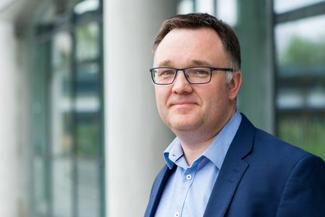
Ben Seymour (Curriculum Manager, International Baccalaureate) described the IB’s Career-related Programme (CP). This combines learner-selected Diploma courses, including maths, English or history, with career-related study. A third strand, the “CP core”, links academic and career threads through a personal and professional skills course, a research project, language and cultural studies, and community engagement. Ben drew some lessons from the IB for post-16 reform. Education must be student-centred, allowing self-directed learning away from the classroom - learning must be relevant, so that students understand what they’re doing and why and pathways must be clear, flexible and transferable beyond the system. Above all, academic and vocational routes must be treated equally. He cited V levels’ disconnection from A levels as a missed opportunity for the sort of cross-pollination he would like to see.
Fiona Morey OBE (Executive Principal, London South Bank University) offered a hopeful glimpse of integrated tertiary practice. Rooted in South London, LSBU Group includes the university, an LSBU-owned FE college and an LSBU-sponsored multi-academy trust. Carefully mapped progression pathways in locally relevant sectors like the built environment, health or science lead learners from ESOL at entry level, right through to secondary, apprenticeships, degrees and postgraduate education. Different institutions support different stages, with the aim being a clear but flexible line of sight to a chosen career. Each student’s journey can be followed, from free school meals to care leaver status, allowing for contextual, place-based offers. Employers, meanwhile, deal with a single point of contact rather than being approached separately by each institution.

This streamlines engagement, helping local businesses contribute more effectively to curriculum design, work experience and apprenticeships . It also means LSBU can respond fast, integrating new career pathways as employer demand arises. Lastly, Jim Dickinson (Associate Editor, Wonkhe) discussed the broader debate around skills, arguing that it often confuses skills level with progression route. Universities are assumed to be “academic” and colleges “technical”, even while technical education also happens in universities, hidden from view. Students, he argued, tend to worry less about their next step than about whether their options stay open to a change of direction or a sideways move. He also turned to England's market-based higher education choice system. It has no supply planning to speak of, meaning those with the luxury of choosing elite universities often inadvertently squeeze vocational and regional provision elsewhere.
Devolving skills without including higher education, therefore, is a huge risk – without devolving universities, regional mayors cannot influence higher skills provision, while integrated tertiary systems like LSBU would struggle to exist. Geography matters, he said.The webinar demonstrated that bold reform is already happening across the sector. However, if we are to grasp the moment and deliver more than incremental change, the sector must keep the momentum going, showing the government, the rest of the sector – and, of course, young people – what is possible
Towards a Bold Future...webinar recording
Chaired by Olly Newton, Executive Director of Edge Foundation, and Martin Cumella, co-founder and editor of the Skills and Growth Initiative, the webinar brought together leading voices offering perspectives from four distinct lenses, international education, the International Baccalaureate, innovation within England, and the Welsh post-16 education and training system.