
Sixteen years ago when I arrived at Brandauer – a Birmingham-based precision stamping and tooling manufacturer founded in 1864 – the average age on our factory floor was 58. I knew without a pipeline of fresh talent that we had problems ahead. A previous apprenticeship scheme had failed but the issue wasn’t the young people but our approach. So, we set an ambitious commitment to maintaining 10 apprentices in a business of 50-70 people. We carefully piloted and selected high-quality training providers and restructured our candidate selection and pastoral care. Today, we have 12 apprentices at various levels and in various roles – machinists, toolmakers, marketing, supply chain, and warehouse logistics.
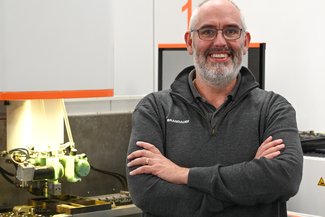
Three members of our senior leadership team came through our apprenticeship programme. One is now a director, and my business partner as investor and shareholder of our successful recent management buyout. I'm proud to say we haven’t lost an apprentice in four years, and even when people do leave, I only see it as a failure if they leave the industry altogether – the entire industry benefits from a healthy skills pool.
But the pressure is on. The extension of minimum wage increases to apprentices and National Insurance changes force SMEs to make tough decisions. Brandauer has avoided cutting investment in the future and deliberately made adjustments elsewhere so we can continue offering apprenticeships. Why? Because particularly in niche, high-skilled sectors, businesses need to invest in their future. People operate your business and that human element is irreplaceable. When times are hard, reduce numbers if necessary, but maintain a nominal level. When demand rebounds – and it will – you’ll have that pipeline ready. Stop entirely, and you lose that option when you need it most.
The apprenticeship system has served Brandauer exceptionally well. As a non-levy payer, I have no complaints about funding levels. Securing a quality training provider is absolutely key, however. And businesses often fail to recognise the need to invest beyond the apprenticeship itself. I think many have unrealistic expectations and provide little in the way of ongoing support. This is especially important in areas like the West Midlands, which has high rates of young people not in education, employment, or training. Social mobility here is starkly difficult and regionally dependent, so it is vitally important to give young people opportunities they might not otherwise receive. We’ve recently started working with a young person from this background, and it can be daunting for a business of our size, especially when apprentices require functional skills support in areas like maths and English.
Looking ahead, I have some concerns around reforms, particularly to assessment. My worry is that some of the proposals are motivated by cost-savings rather than quality improvement. The growing burden on employers to assess behaviours, for example, is tricky, as these are likely to be measured inconsistently. Plus, I think it’s a conflict of interest to have training providers mark their own students' work. But despite the challenges, apprenticeships have been transformative for Brandauer. They have secured our future and contributed to the broader health of our sector. The system isn’t perfect and never will be – but the value proposition remains sound.
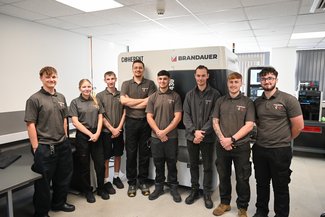
We do need to promote apprenticeships better, though. During a cost-of-living crisis especially, the ability to vocationally learn while you earn and emerge with a lucrative career is an extremely powerful message.
I have highly skilled people in their mid-twenties earning substantially more than I’d ever pay a graduate. Ultimately, the demand from young people is there. The question is whether businesses and providers will step up to meet it when times are tough. But it’s essential to find a way. Make the adjustments you need elsewhere, but don’t abandon your investment in the future. Because without skilled people, there is no future.
Written by
Rowan Crozier, CEO of Birmingham-based precision engineering firm, Brandauer.