To many children, climate education can feel abstract. They often learn about global challenges – rising sea levels, plastic pollution or renewable energy transition – as distant problems requiring distant solutions. But what if learning started within their own communities, their own island, and connected them directly with peers facing similar challenges elsewhere? That was the premise behind Island Explorers, an educational programme developed by the University of Strathclyde, which used island life as the lens for understanding sustainability. Between 2018 and 2021, it engaged over 2,000 primary school pupils – initially across Glasgow and later expanding to the Outer Hebrides –with partner schools in Hawaii, St Vincent, Réunion and beyond. Each year group involved tackled a different UN Sustainable Development Goal (SDG) through six lessons that combined research, international exchange and hands-on solution development.
The approach worked. Pupils built prototypes and presented solutions in Dragon’s Den-style sessions. They genuinely engaged with complex problems. Teachers reported high enthusiasm, and the programme evolved from urban classrooms to rural schools, each connecting with partner schools in island settings. Island Explorers’ success taught us a lot about what works: pupils need ownership over real problems, connections to real places and people, and the freedom to develop solutions on their own terms. It also revealed where the model needed tweaking. The one-to-many partnership approach that emerged proved impractical to deliver as the programme grew.
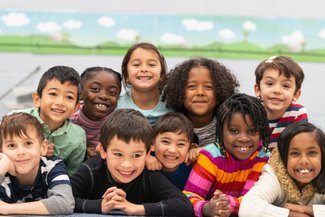
And while we produced STEM resources, these required significant rework for different settings. Additionally, pupils impressed us by consistently proposing solutions beyond the technological – delving into policy, community campaigns and legal frameworks – areas that excited them but which the STEM-focused resources couldn’t fully support. The team behind the original Island Explorers, including my colleague Francesco Sindico – the real brainchild behind the programme – have now analysed its successes and lessons to inform the proposal for a new model. Outlined in a recently published scoping document, this addresses the original programme’s limitations and focuses exclusively on island-to-island partnerships.
Our aim now is to pair each island school one-to-one with another island school, deepening partnership and cultural exchange. Additionally, instead of tying specific challenges to specific islands, we want to create a resource library where schools can choose which SDG matters most to their community. For instance, one island might focus on renewable energy while their partner explores food security. Although the challenges are different, because they use the same framework, there are rich opportunities for knowledge exchange.
The proposed new structure also shifts from six fixed lessons to three flexible stages, creating much greater variability in how schools can apply the model. Stage one sees pupils exploring their own island identity to determine which sustainability challenge matters most to their community. Stage two sees island partners connecting – pupils will present their island to their partner school and vice-versa – sharing how their chosen challenge manifests locally, before researching from scientific, social, and legal perspectives. Finally, stage three focuses on solutions: examining what exists globally – from local programmes to international agreements – before developing and presenting their proposals.
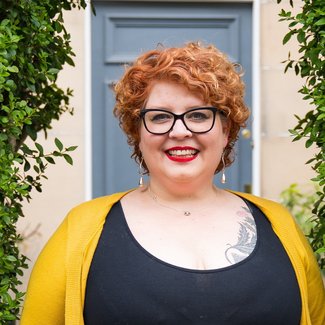
Our new model aims to be more adaptable to different contexts – weekly lessons, term-long projects, or after-school clubs – without requiring resources to be completely rewritten. The legal and policy dimension will also become explicit through mock debates, community presentations, and policy drafting exercises. Throughout, teacher resources will require minimal preparation, preserving the principle that made the original Island Explorers accessible in the first place. Participation shouldn’t depend on school budgets or require teachers to develop materials from scratch. I joined the original Island Explorers during its final stage, supporting young people as they showcased their solutions. What really struck me was their sheer excitement and engagement with the topics. Beside the other novel aspects of school-to-school partnerships, this proved to me that when sustainability education connects to real places and real relationships, pupils engage completely differently.
The challenges they face are no longer distant problems with distant solutions, but tangible issues they can contribute to solving. And this means they will take what they learn with them.
At the moment, our new approach is still just that – a concept. Our proposed new Island Explorers pilot will last twelve-months, initially with four island schools – two partnerships – one bridging significant geographic distance, another between closer neighbours. This will allow us to test how the new framework performs in different scenarios. We want to develop complete resources for one SDG, trialling these in real classrooms, gathering feedback, and producing specifications for a digital platform that will eventually host a rich resource library and facilitate island school networking at scale.
All this will help prove that the redesigned model can be rolled out much more widely, without constant central staff support. The next challenge is securing funding, but as our detailed scoping report highlights, we have a clear roadmap. What comes after that is the opportunity to bring this model to island communities worldwide – equipping young people with the tools to understand their islands' challenges, the confidence to tackle them, and a stronger sense of their place in shaping the future.
Written by
Dr. Kate McKenzie, Director and CEO, Climate Change Legal Initiative. To learn more about Island Explorers, download the report below.