National Careers Week is a celebration of ambition, opportunity, and the many pathways young people can take into fulfilling work. But it should also be a moment of honest reflection. Because behind the assemblies, careers fairs, and social media campaigns lies a persistent and under-discussed problem: our education and skills system is still not working well enough for small and medium-sized enterprises (SMEs). SMEs make up 99% of UK businesses and employ millions of people. They are the backbone of our economy and they are the future employers of today’s pupils, particularly outside the big cities. Yet too often, when it comes to engaging with schools - whether through work experience, apprenticeships, T Level placements, careers talks, or curriculum projects - small businesses find themselves locked out, overwhelmed, or unsure where to begin.
This is not due to a lack of willingness. Time and again, small business leaders tell us they want to support young people. Edge Foundation and Amazing Apprenticeships have brought these stories to life in a recent series of films highlighting the wonderful benefits that apprenticeships bring to SMEs and young people in local areas across the country. These businesses see the value of nurturing future talent and giving back to their communities, but good intentions alone cannot overcome structural barriers. In short, the system is too fragmented. Schools are navigating multiple frameworks, benchmarks, and accountability pressures. Businesses are confronted with a patchwork of schemes, portals, and acronyms.

There is no clear, simple front door for SMEs to understand their role or their stake in engaging with education. This complexity can be managed in a large corporation with a dedicated HR team, but a small business will struggle. The consequences of this may be felt for decades to come. When small businesses struggle to engage, young people’s understanding of career options narrows. They are more likely to hear from the biggest brands, not the innovative local firms driving growth in their communities. At the same time, SMEs miss opportunities to shape the skills and attitudes of their future workforce. As recent analysis by the Careers & Enterprise Company shows, the business case for engaging with schools is stronger than ever.
The good news is that solutions do not require a wholesale reinvention of the system. They require better join-up, clearer communication, and practical support that recognises the realities of running a small business. Futures for All, for example, have seen first-hand how practical infrastructure can remove barriers for small businesses. Their Work Experience Finder provides a simple, single front door for employers to connect with schools and young people nationwide. Drawing on fifteen years experience, they have have built digital platforms and step-by-step guidance that make it easier for SMEs to design and deliver high-quality work experience. Quality guides and templates demystify safeguarding, structure and meaningful learning outcomes.
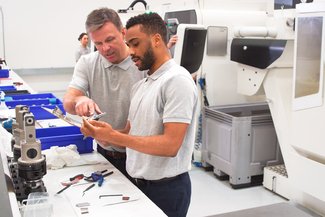
That means any employer, regardless of size or sector, can participate with confidence and create genuinely impactful experiences for young people. Small Business Summer, delivered by Amazing Apprenticeships and supported by Edge Foundation, also provides straightforward guidance to small businesses on how to get involved with schools. The next step in Edge's Apprenticeships Work campaign, it's set to run through the 2026 summer term. It demystifies apprenticeship processes and offers ready-made, flexible resources that can be adapted to different sectors and SME sizes.
Crucially, it recognises that engagement does not have to be all or nothing. A meaningful contribution might start small.
It could be a virtual Q&A, setting a real-world project brief, a short work shadowing placement, or exploring a shared apprenticeship model. With the right scaffolding, these steps become manageable and truly impactful. National Careers Week is a reminder that careers education is not an abstract exercise. It's about connecting young people to real workplaces, real opportunities, and real futures. If SMEs remain on the margins of that conversation, we all lose out.
Written by
Olly Newton, Executive Director, Edge Foundation, Dr Elnaz Kashef, Director of Policy, Research and Impact, Futures for All and Anna Morrison CBE, Director, Amazing Apprenticeships