Compass is now providing students with opportunities to build vocational and life skills and boost their career prospects, regardless of their background or ability.
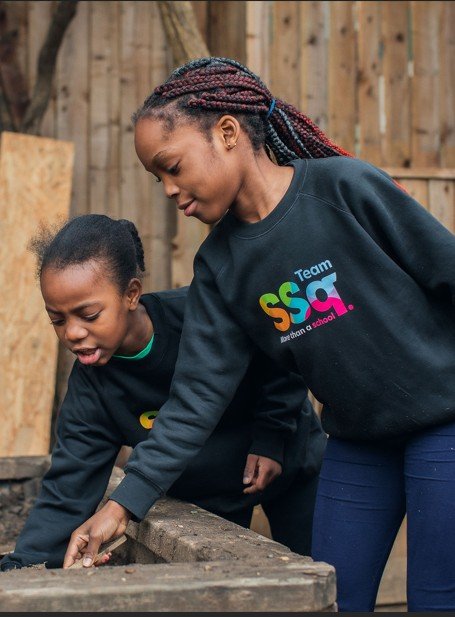
Often in education, wellbeing and academic achievement are pitched against one another. Focusing on wellbeing is seen as softer than the “real work” of teaching. But in communities facing numerous social challenges, from housing pressures to financial hardship, it’s inevitable that children will carry these through the school gate every morning. In these contexts, wellbeing becomes impossible to ignore. Surrey Square Primary School in Southwark – one of London’s most deprived boroughs – serves families exactly like these. It’s because of these pressures that we’ve carefully developed an approach that serves our young people’s needs. Despite the pressures they face, our children still achieve strong results. People often ask: how? The answer is that we invest in making pupils feel safe and valued. We listen to parents, who become our partners. The “fluffy” wellbeing part turns out not to be a distraction but the engine. Academic results follow.

These ideas didn’t arrive to us fully formed. They’ve been tested and developed over nearly twenty years, starting with the core values introduced by Liz Robinson, previously Headteacher of our Junior School and now the Trust’s CEO. These are not “branding” values – they are designed to genuinely support staff, pupils and parents in navigating challenges and understanding each other. When something goes wrong, we don’t reach for sanctions but for compassion. If a teacher is stuck on how to deliver the curriculum, they focus on enjoyment. Everything else grows from here. Over time, living these values helped us to develop some signature practices that were genuinely different and effective – flipped quality assurance that puts teachers in charge of their own professional development; changemaker projects that empower students to create positive impact in the world.

Crucially, these aren’t bolt-ons but an expression of a philosophy built over many years in response to our community’s needs. And as time went on, others took notice. We were sharing our work at conferences, within other schools and we were welcoming international visitors from places as far flung as Hong Kong, India and Australia. In 2024, we won Primary School of the Year at the Pearson National Teaching Awards.
However, even with all this external validation, our signature practices largely lived in the heads and hands of the people who had built them. If a member of staff left, could we carry their work forward? This focused our minds. We handed each practice back to the staff member who led it and asked them: what is this, why do we do it, how does it work? Articulating something you do instinctively – writing it down, naming the pitfalls, finding the words for the “why” – is invaluable. But practice doesn’t stand still. We were mindful to ensure our toolkit would be easy to update and so chose a format that could grow. This led to individual “recipe-style” practice cards, designed to be added to, adapted and altered as our thinking evolved.
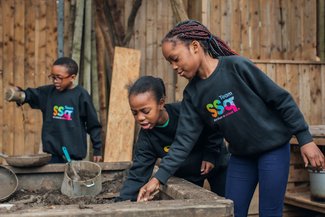
The result is our Signature Practices Toolkit. It currently covers 13 signature practices, what each involves, why it exists, how it works, common mistakes, and reflections from a teacher, parent or child who has lived it. We know you cannot transplant an approach wholesale – it has to be developed in context. But we hope by preserving our school’s knowledge and experience, we can spark inspiration. This is partly for ourselves – new and future staff; anyone who would like to understand what SSQ does and why. But we also aspire to influence wider, for the good of learners everywhere. So these cards are also for schools that visit and the educators who come from around the world seeking fresh approaches.
The impact of our approach is measurable. 90% of Year 6 pupils feel empowered to change issues they care about, compared to 66% nationally.
The impact of our approach is measurable. 90% of Year 6 pupils feel empowered to change issues they care about, compared to 66% nationally. One story highlights this better than any statistic. A Year 3 child mentioned that there were pests in his flat. Sadly, he was not alone. However, the problem wasn’t only pests but that the council was ignoring their concerns. So the children decided to make themselves impossible to ignore. They wrote persuasive letters on rat-shaped cards, packed these into a box, and posted it to the council. When opened, rats fell across the desk. The council called us, came to the school and sat down with our families. The parents were finally listened to. This perfectly sums up what we are trying to achieve – children who see that even in the most challenging of circumstances, they have the power and capacity to do hard things. And if these resources can nudge just one school in that direction, then they’ve done their job.
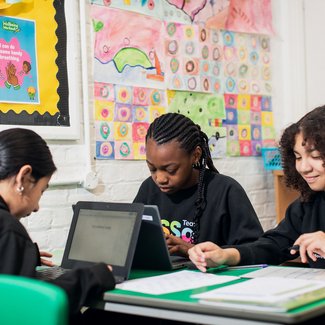
Matt Morden, Headteacher at Surrey Square Primary School, part of the Big Education Multi-Academy Trust.