English schools face a perfect storm: rising absenteeism, worsening mental health and growing SEND pressures. At the same time, recognition is growing that education must do more than deliver subject knowledge alone. Young people need creativity, critical thinking, collaboration and adaptability – dispositions that help them grow into confident, capable individuals. Recent advances in AI are sharpening this focus, reminding us that we must nurture the distinctly human strengths that technology cannot easily duplicate.
If the goal is clear, agreement on the path is perhaps less so. During six years as Executive Director of Waldorf UK – including working with colleagues through Edge's Deeper Learning UK network – I’ve seen how Waldorf approaches address these challenges directly. As the government rewrites the national curriculum following Professor Becky Francis’ Curriculum and Assessment Review, the timing couldn’t be better to consider evidence-backed alternatives. A new report led by Professor Bill Lucas at the University of Winchester’s Centre for Real World Learning brings helpful evidence to this discussion. It examines four long-standing Waldorf practices – experiential, interdisciplinary, playful and creative learning – and their impact on children’s development.

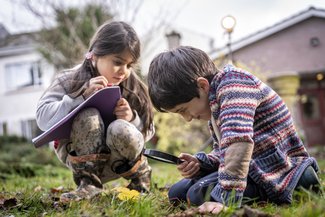
Experiential learning places children in situations where they can explore ideas through action. In Waldorf settings, this might involve gardening, crafts, scientific investigation, fieldwork or roleplay. Activities vary, but the intention is that learners work together, test ideas, make mistakes, try again, and reflect on their discoveries. The report finds strong evidence that experiential learning builds empathy, cooperation, vocabulary, physical confidence, conceptual understanding and critical thinking. The latter is particularly notable in maths and science. Of course, these benefits require carefully structured experiences that help children connect theory to the world around them. Teachers need time, resources and professional support to shape activities with clear purpose and opportunities for feedback. Done right, though, it can support re-engagement, making learning more authentic and meaningful.
Interdisciplinary learning brings subjects together, helping pupils see connections between them. A single theme, like ancient civilisations, might weave together history, geometry, art, literature and drama. Waldorf schools have long used this approach, particularly in lower years, where story-rich teaching naturally links the arts, sciences and humanities. The report found that well-designed interdisciplinary work boosts motivation, strengthens teamwork and helps children transfer understanding across subjects. It supports the kind of flexible thinking they will require throughout their lives and lends itself particularly well to methodologies like project-based learning. Again, however, this does not happen in isolation – teachers need subject knowledge, support structures and a shared understanding of the principles behind the approach.
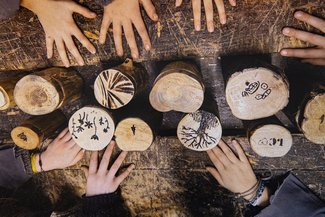
Without this, learning risks remaining shallow. With it, though, children develop a richer sense of how the world fits together – a priority echoed by international organisations including the OECD, the International Baccalaureate and the Association for Science Education.
Learning through play is foundational to healthy development in Waldorf education. Skilled practitioners create opportunities for play to be child-initiated, spontaneous, and imaginative, providing rich opportunities for development. It can involve building with natural materials, creating stories, movement and roleplay. Through play, children of all ages practise social skills, experiment with new ideas, and develop physical and emotional confidence. The study confirmed that different types of play support different growth areas. For example social and emotional development is closely linked to child-led play, whereas activities led by skilled practitioners can strengthen children’s confidence, conceptual understanding, numeracy and literacy. But it requires clarity of purpose and a balance between freedom and guidance. This aligns with the UN Convention on the Rights of the Child, which affirms every child’s right to play and to take part in cultural and artistic activities.
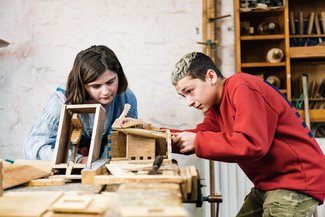
Creative education: Waldorf doesn’t treat creativity as a ‘future-facing’ skill or separate subject. Instead, we weave it throughout daily learning. Painting, music, handwork and eurythmy (expressive movement) offer children varied ways to express their ideas, explore feelings and stretch their imaginations. The report found that creative learning develops originality, persistence, risk-taking, self-awareness and – subsequently – greater wellbeing. Crucially, it helps learners define problems as well as solve them – an essential distinction when AI performs some tasks well but lacks human insight. These findings reinforce calls from the Times Education Commission, Arts Council England and recent PISA research into creative thinking. England remains unusual by not embedding creativity more explicitly across education.

Education is often framed as a choice between knowledge and enquiry – knowledge versus skills, exams versus employability. The report concludes that this false binary is a barrier to progress.
Waldorf practice shows that young people need both: strong knowledge and rich opportunities to develop empathy, resilience, creativity and adaptability. Experiential, interdisciplinary, playful and creative learning are central to a rounded education but to succeed, teachers need sustained development and appropriate support.
As deeper learning gains prominence, more schools are naturally piloting Waldorf-inspired practices. Our approach is evidence-informed, practical and engaging. Integrating hands-on, practical and artistic activities into all parts of the curriculum, widens children’s participation, strengthening wellbeing and making learning more enjoyable. The Waldorf approach is growing worldwide, including in countries previously steeped in high-stakes, knowledge-based learning such as China and India. This reflects calls from parents, teachers and employers to rethink how schools support our young people. Through Deeper Learning UK, Edge has already done great work highlighting and connecting strong examples of deeper learning practice, and Waldorf UK is eager to contribute to this effort.
Written by
Fran Russell, Executive Director of Waldorf UK