30 March 2026 00:00
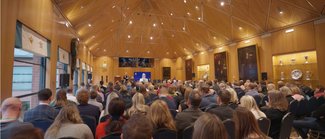
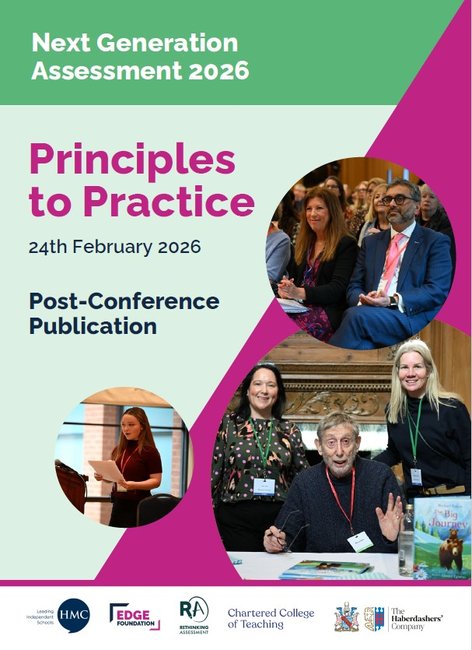
The fourth Next Generation Assessment Conference was held in London on 24 February 2026.
A collaboration between the Chartered College of Teaching, Edge Foundation, HMC, Rethinking Assessment, and this year’s hosts, The Haberdashers Company, the event provided a unique chance to connect with leading voices and innovators in assessment. It included keynote conversations and workshop sessions.
The post conference publication includes contributions from many of those who took part, including Professor Bill Lucas, Fran Wilby, Dr Laura Kerslake and Dame Alison Peacock. You can download the document below.
Next Generation Assessment Conference 2026 Video Highlights
Innovation Lab.
A message from the conference sponsors.
A letter to my younger self.
I’m sixteen as I’m writing this, but you are only twelve years old. I know that you hate going to school at the moment, that you feel stupid and that you cry every day, but I want to tell you that you’re going to do things you can’t even imagine.
Inspiration from other countries.
The value of hearing from assessment practice around the world was immediately apparent. Too often education systems become inward looking, convinced that their own metrics are the only ones that matter. However, increasingly, it is becoming hard to ignore voices across the globe that call for reform
Interdisciplinary approaches to project-based learning.
The starting point for a project is a question or practical challenge of the learner’s own choosing. This simple fact contains the key to a mode of learning that is both more engaging, starting as it does within the world of the learner’s interests, and more inclusive, in that the scope spans as wide as the domain of questions that a young person might wish to explore.
Does the current assessment system work for all?
What might need to change, asks Michael Rosen.
Inclusive assessment practice panel discussion.
There are so many lenses through which we can look at the issue of inclusive assessment – language, neurodiversity, SEND. Yet what it boils down to is how we can make sure that assessment is constructive, formative and gives opportunities for all young people to exhibit their strengths and build up the areas that they need to work on.
Central role of schools in helping students and staff to flourish.
If you could take yourself to a school, what might change in terms of pedagogy if you were set on developing a flourishing set of staff and students?
How might AI support all learners?
Generative AI could play a part in supporting teachers and learners with aspects of the planning, teaching and feedback cycle, such as helping to develop appropriate hinge questions to check for understanding or even utilising gen AI or AI-powered tools to assess student work and provide feedback.