Walsall College: Supporting real-world learning through a creative enterprise
How a well-designed creative enterprise can serve learners, staff, your institution and the wider local community.
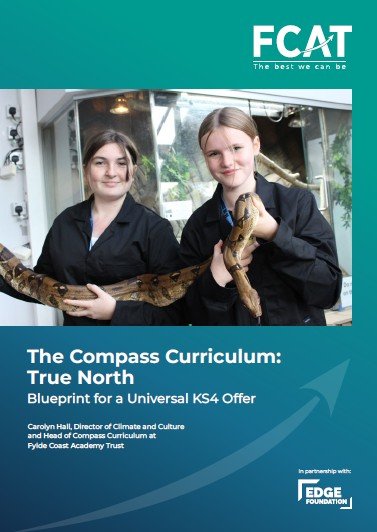
In Blackpool – the location of seven out of the ten most deprived neighbourhoods in England – Fylde Coast Academy Trust are fundamentally reimagining what Key Stage 4 education should look like. The result is the Compass Curriculum. The transition from Key Stage 3 to Key Stage 4 is a critical moment for young people, and it is one where engagement frequently drops. Students who struggle to connect a traditional academic offer to their sense of purpose or future direction become harder to reach, with consequences compounding over time.
While this challenge exists in schools across England, it is particularly acute in areas of high deprivation, where, on average, persistently disadvantaged pupils leave secondary school almost two years behind their peers. NEET rates in left behind areas also run well above the national average.
The Compass Curriculum is delivered one afternoon a week, at a partner college or provider and replaces one GCSE with a two year programme. Students can choose from a broad range of pathways, spanning technical trades, land-based industries, sport and community roles and academic routes. This careful selection reflects local jobs and industries and gives learners a taste of local opportunities. Compass is not simply a vocational track for students who don’t pursue academic routes – it is a universal offer that treats vocational and academic learning as equally valid preparation for working life and further study. And with all costs (including transport and specialist equipment) met by the Trust, no student, regardless of background, faces barriers to participation.
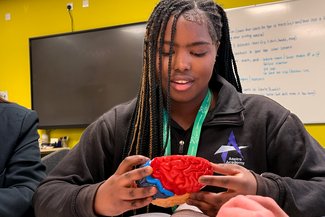
In the Compass Curriculum’s first year of delivery, 335 pupils – a third of all Year 9 students across the Trust’s five secondary schools – took part, with demand exceeding available places. The programme achieved a 97% pass rate for first year qualifications and a 1.9% attendance uplift in the Trust’s most deprived schools. This can be attributed to students working in professional settings, where they are treated as junior professionals. And alongside technical skills, every student develops essential employability skills through the Skills Builder Universal Framework. Post-16, over 50% of the first cohort have subsequently chosen to continue on their Compass pathway.
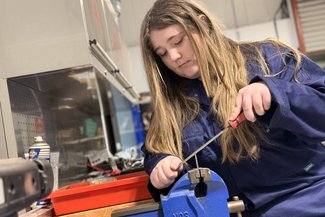
The document below draws directly from Fylde Coast Academy Trust’s experience building and delivering Compass, including the thinking behind the programme and tips for practical delivery, including:
For multi-academy trust and school leaders exploring how to better serve young people in high-deprivation areas, or curriculum designers looking to build more meaningful progression routes into KS4, this document outlines how a well-designed partnership model can broaden outcomes, strengthen community ties and give students a stake in their own futures.
Carolyn Hall, Director of Climate and Culture at Fylde Coast Academy Trust