The language used in education shapes policy, practice, and perceptions. Edge’s series asks, What's in a Word? and scrutinises the impact of the terminology we commonly employ.
The word ‘practical’ in the Oxford English Dictionary seems important and worthwhile:
adjective
- of or concerned with the actual doing or use of something rather than with theory and ideas.
- (of an idea, plan, or method) likely to succeed or be effective in real circumstances; feasible.
‘Actual doing’ sounds like a good idea. An association with success in the real world is surely to be desired. So how is it that the word ‘practical’ is seen as so much less important in education than its apparently smarter sister ‘academic’?
There’s a long answer to this which starts in classical Greece, weaves its way through early Christianity and Islam, bursting onto the scene in the Education Act of 1944 with the creation of grammar schools; technical schools and secondary moderns. Pupils were sorted into three routes at age 11 by means of an academic test which came to be known as the 11+. While the intentions of the law-makers may have been to create three pathways of equal esteem, that has never happened in England.
For me there are two other seminal moments which help us better understand the curious undervaluing of the practical in schools today. The first took place in the 17th century and was the result of a scientific mistake by René Descartes. Without the benefit of today’s medical equipment Descartes assumed that mind and body were entirely separate. Minds, he suggested, were clever, sophisticated and capable of reasoning; bodies were menial, mechanical and quite inferior. His well-known mantra, ‘I think therefore I am’ continues to shape contemporary attitudes. It took Antonio Damasio’s brilliant book, Descartes’ Error, to show just how wrong this unhelpful binary distinction was. Fast forward some 200 years and a category error of a different kind was born, I suggest, out of Victorian social snobbery. Most of us will be familiar with the 3Rs, Reading, wRiting and aRithmetic, the mnemonic for an academic ‘core’ that has more recently become literacy and numeracy. But the 3Rs we know today underwent a strange mutation according to Sir Christopher Frayling in an interview with The Guardian.
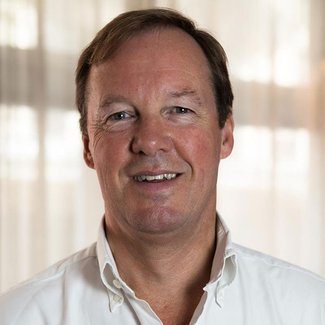
Sir Christopher FraylingThe original meaning of the 3Rs was completely different in Regency times, at the beginning of the 19th century. The three Rs were Reading, wRoughting and aRithmetic [my use of capitals] - in other words, literacy, making things and numeracy. And then in the era of Mr Gradgrind and the Great Exhibition of the 1850s, the wroughting got dropped in favour of writing.
The burgeoning middle classes did not want their offspring to be focusing on wroughting; that was for tradesmen. The effects of this educational sleight of hand are still with us today. Passing exams has become the gold standard of schooling. Practical pathways, BTECs, apprenticeships, T levels and the like are too close to ‘wroughting’ for academic sensibilities. In terms of school subjects a strange hierarchy survives. Maths carries most prestige, being closer to the world of abstract thought. English with its grammatical rules is not far behind. The sciences are valued in order of their proximity to maths – physics, then chemistry and finally biology. Then the arts and humanities. And finally the practical ones - PE, dance, design and technology. The pecking order of subjects and the idea of an academic or practical pathway perpetuate Descartes’ error.
Yet it need not be so. The learning sciences show us that you simply cannot separate mind from body; they work in tandem for best effect; mind needs body as the brilliant Intelligence in the flesh by Guy Claxton demonstrates. We need to move on from the lazy thinking that has so disadvantaged the body and all things practical. At an extreme of the debate we have become obsessed with knowledge-rich teaching as opposed to, say, skills-rich learning or real-world learning or, as Harvard academic David Perkins puts it, ‘lifeworthy learning’.
The closest phrase I know to capture the reality of mind-body and that avoids the false opposites of practical or academic is ‘head, heart and hands’. Such thinking goes back to Johann Pestalozzi and is alive in England today in, for example, Bedales and School 21. As Jacob Bronoski observed, ‘The hand is the cutting edge of the mind.’ And had Descartes had the benefit of neuroscientific understanding he might have said ‘I think, feel and make, therefore I am fully alive’.
Written by
Bill Lucas, Professor of Learning and Director of the Centre for Real-World Learning at the University of Winchester. Bill is an international respected education reformer and is a non-executive director of Skills Builder and the co-founder of Rethinking Assessment.
Next time: Leesa Wheelahan interrogates the meaning of ‘skill’, a word that is currently completely ubiquitous and yet rarely interrogated.